Chilean Brazo de Reina Recipe
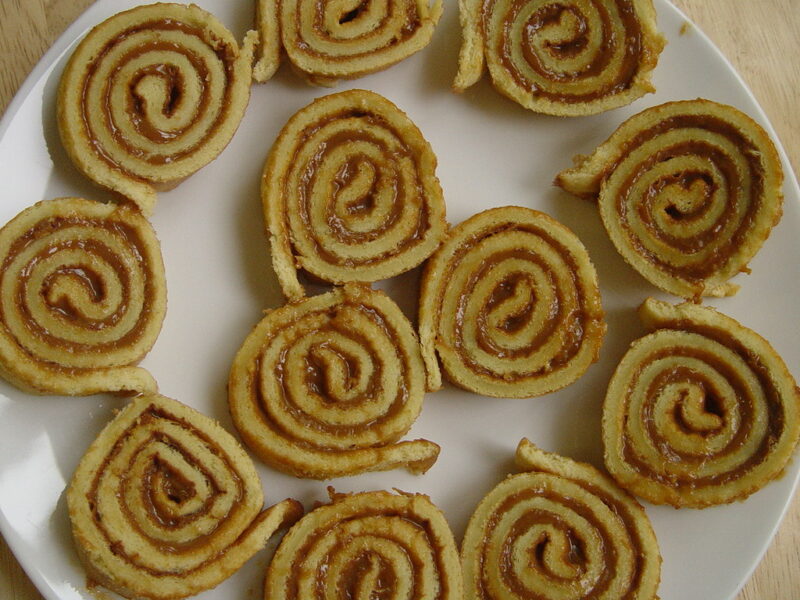
Brazo de Reina is a traditional Chilean rolled sponge cake filled with manjar, the rich caramelised milk spread also known as dulce de leche.
Similar in appearance to a Swiss roll, Brazo de Reina is made by baking a thin, light sponge cake, spreading it generously with manjar and carefully rolling it into a log. It is usually finished with a dusting of powdered sugar, although coconut, nuts and additional manjar can also be used for decoration.
Brazo de Reina is particularly popular as a sweet accompaniment to tea or coffee and is commonly enjoyed during once, Chile’s traditional late-afternoon meal or snack.
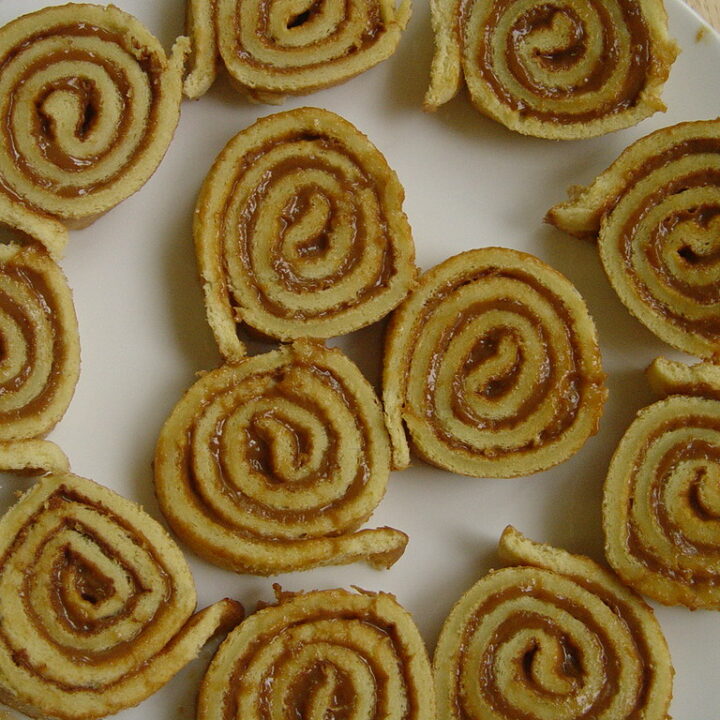
Manjar is the traditional choice of filling in Chile and gives the cake its distinctive rich, caramel flavour. Once filled, the cake is rolled tightly and sliced into rounds for serving.
There are many variations on the basic recipe. Some Brazo de Reina cakes are simply dusted with powdered sugar, while others are decorated with shredded coconut or nuts. More indulgent versions may also be covered with another layer of manjar on the outside.
The result is a relatively simple cake in which the light sponge contrasts with the thick, sweet filling.
What is Manjar?
Manjar is the name commonly used in Chile for a thick, sweet caramelised milk spread closely related to dulce de leche.
It is used extensively in Chilean baking and desserts, including cakes, pastries, biscuits and alfajores.
Manjar is the traditional filling for Brazo de Reina. If you cannot find Chilean manjar, regular dulce de leche is an excellent substitute and is much more widely available outside South America.
For this recipe, look for a thick dulce de leche that can be spread over the sponge without running out as the cake is rolled.
Origin & Cultural Significance
Rolled sponge cakes are found in many different cuisines, and similar desserts are particularly common throughout Spain and Latin America.
Depending on the country, variations may be known as brazo de gitano, pionono or other regional names. Fillings also vary considerably, ranging from jams and creams to chocolate and caramel.
In Chile, the use of manjar is particularly characteristic of Brazo de Reina.
The cake is commonly associated with once, a traditional Chilean late-afternoon or early-evening meal. Once often includes tea or coffee accompanied by bread, sandwiches, cakes and other sweet or savoury foods.
A slice of Brazo de Reina therefore makes a natural accompaniment to a cup of tea or coffee.
Brazo de Reina vs Swiss Roll
Brazo de Reina and Swiss roll use essentially the same basic technique: a thin sheet of sponge cake is covered with a filling and rolled into a log.
The biggest difference is the filling.
Swiss rolls are commonly filled with jam, cream or buttercream, whereas traditional Chilean Brazo de Reina is typically filled with manjar.
Other rolled cakes can be found throughout Latin America and Spain, so the names and precise recipes vary considerably from one country to another.
Chilean Brazo de Reina Recipe
The key to a good Brazo de Reina is producing a light, flexible sponge that can be rolled without breaking.
The sponge should only need around 8–10 minutes in the oven. Avoid overbaking it, as a dry sponge will be considerably more difficult to roll.
Once it comes out of the oven, roll the sponge while it is still warm and allow it to cool in its rolled shape. It can then be carefully unrolled, covered with manjar or dulce de leche and rolled again.
Ingredients
- Large eggs, separated - 6
- Confectioners' sugar - 1 cup
- All-purpose flour - 1 cup
- Baking powder - 2 tsp
- Manjar or thick dulce de leche - 1½–2 cups
- Powdered sugar - for dusting
Optional
- ½ cup Shredded coconut
- ¼ cup Chopped nuts
Instructions
- Preheat the oven to 350°F (180°C).
- Line a large rimmed baking sheet or Swiss roll tin with parchment paper.
- Sift the flour and baking powder together and set aside.
- Separate the egg yolks from the whites.
- Using an electric mixer, beat the egg whites until they form stiff peaks.
- Gradually add the confectioners' sugar while continuing to beat the egg whites.
- Add the egg yolks one at a time, mixing gently until incorporated.
- Fold the sifted flour and baking powder into the egg mixture. Be careful not to overmix, as you want to retain as much air in the mixture as possible.
- Spread the batter evenly over the prepared baking sheet in a thin layer.
- Bake for approximately 8–10 minutes. The sponge should be cooked through but should not become heavily browned or dry.
- Lay another sheet of parchment paper on the worktop and lightly dust it with powdered sugar.
- Carefully turn the warm sponge out onto the prepared parchment and remove the parchment used during baking.
- While the sponge is still warm, gently roll it up using the parchment paper to help you. Allow it to cool in its rolled shape.
- Once cool, carefully unroll the sponge.
- Spread an even layer of manjar or dulce de leche over the surface, leaving a small gap around the edges.
- Roll the cake up again, this time without the parchment inside.
- Place the Brazo de Reina seam-side down and dust generously with powdered sugar.
- If desired, decorate with shredded coconut, chopped nuts or additional manjar.
- Slice into rounds and serve with tea or coffee.
Nutrition Information:
Yield: 8 Serving Size: 1Amount Per Serving: Calories: 29Total Fat: 2gSaturated Fat: 1gUnsaturated Fat: 1gSodium: 18mgCarbohydrates: 3gFiber: 1gSugar: 2gProtein: 0g
Nutrition is provided and calculated by Nutritionix. It is for general information purposes and is only a rough estimation.
Tips for Making Brazo de Reina
Roll the Sponge While it is Warm
Don’t wait for the sponge to cool completely before rolling it for the first time.
Rolling it while warm helps the sponge take on its characteristic shape and makes it less likely to crack when it is filled and rolled again.
Don’t Overbake the Sponge
One of the easiest ways to end up with a cracked Brazo de Reina is to bake the sponge for too long.
Because the batter is spread into such a thin layer, it cooks very quickly. Remove it from the oven once it is cooked through and only lightly coloured.
Fold the Flour Gently
Much of the lightness of the sponge comes from the air incorporated into the eggs.
Fold the flour into the mixture rather than vigorously stirring it. Overmixing can knock out this air and result in a denser sponge.
Use Thick Manjar or Dulce de Leche
A thick filling is much easier to work with than a runny dulce de leche.
Spread it evenly across the cooled sponge, but avoid adding an excessively thick layer. Too much filling can be forced out of the ends as you roll the cake.
Leave a Small Border Around the Filling
Leave a small amount of uncovered sponge around the edges when spreading the manjar. This gives the filling somewhere to move as you roll and helps prevent it from spilling out.
How to Store Brazo de Reina
Brazo de Reina can be prepared ahead of time and stored until you are ready to serve it.
Keep the finished cake covered or in an airtight container to prevent the sponge from drying out. If you’re using a commercially prepared manjar or dulce de leche, follow the manufacturer’s storage instructions once opened.
For the best texture, slice the cake shortly before serving rather than cutting the entire roll in advance.
Frequently Asked Questions
Can I use dulce de leche instead of manjar?
Yes. Manjar is the traditional Chilean filling, but dulce de leche makes an excellent substitute and is generally easier to find outside Chile.
Choose a thick dulce de leche rather than a thin caramel sauce so that the filling stays in place when the cake is rolled.
Why did my Brazo de Reina crack?
Cracking is usually caused by the sponge becoming too dry or being rolled after it has completely cooled.
Avoid overbaking the sponge and make the initial roll while it is still warm and flexible. Allowing it to cool in this shape makes it easier to unroll, fill and roll again.
Small cracks aren’t necessarily a disaster. A dusting of powdered sugar, coconut or an outer layer of manjar can help disguise them.
Can I make Brazo de Reina ahead of time?
Yes. Brazo de Reina is a good cake to prepare in advance.
Once filled and rolled, keep it covered so the sponge doesn’t dry out. Add the final powdered sugar or other decoration before serving if you want it to look its best.
What is Brazo de Reina served with?
Brazo de Reina is particularly well suited to tea or coffee. In Chile, it can be enjoyed as part of once, the traditional late-afternoon or early-evening meal or snack.
Serve the cake cut into individual slices so that the spiral of sponge and manjar is visible.
Can I add other fillings?
Manjar is the traditional choice, but rolled sponge cakes lend themselves to many variations.
Jam, cream and other sweet fillings can all be used, although replacing the manjar moves the cake away from the classic Chilean version. You can also keep the manjar filling and add coconut, nuts or other toppings for additional texture.
Photo credit: Rebecca T. Caro