Haitian Tchaka Recipe (Corn, Bean & Pork Stew)
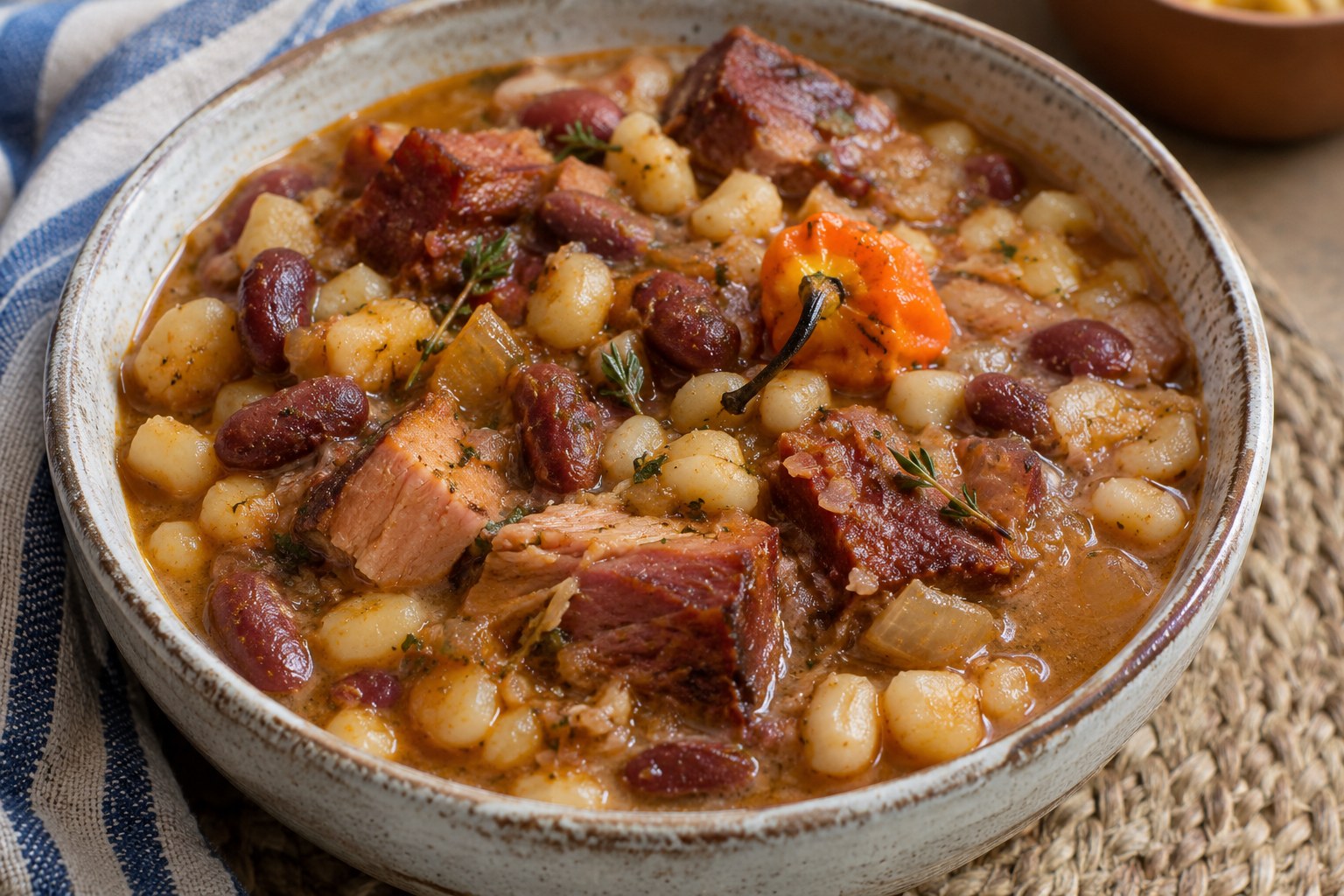
Tchaka is a traditional Haitian stew made with dried corn, beans, smoked or salted pork and aromatic seasonings. Slowly simmered until thick and hearty, the dish combines tender grains, creamy beans and rich, savoury meat in a flavourful broth.
Also known as chaka or tchaka mayi, it is a popular comfort food in Haiti, particularly associated with family gatherings, celebrations and communal meals. This Haitian tchaka recipe uses kidney beans, dried hominy corn, smoked pork, garlic, thyme and Scotch bonnet pepper.

What Is Tchaka?
Tchaka is a thick Haitian stew traditionally prepared with dried corn, beans and meat, most commonly smoked or salt-cured pork.
Its distinctive texture comes from the slow cooking of the corn and beans, which soften and release starch into the broth. The result is somewhere between a thick soup and a substantial stew.
Smoked pork adds a rich, salty flavour, balanced by garlic, onions, herbs and chilli. Some versions also incorporate squash, coconut milk or additional vegetables, giving the stew a creamier consistency.
Although tchaka can be enjoyed as an everyday meal, it also holds an important place in Haitian cultural and religious traditions.
Origin and Cultural Significance of Tchaka
Tchaka is deeply rooted in Haitian food culture, reflecting the importance of corn, beans and other staple ingredients in the country’s cooking traditions.
The exact origins of the dish are difficult to establish, but its preparation reflects the combination of agricultural traditions and culinary influences that have shaped Haitian cuisine.
Tchaka is particularly associated with family gatherings, celebrations and communal cooking. Because it can take several hours to prepare and is often cooked in large quantities, it is well suited to meals shared among relatives, friends and neighbours.
The dish also has significance within Haitian Vodou traditions, where it may be prepared as a ceremonial offering to the lwa, or spirits.
In particular, tchaka is associated with Azaka, a spirit connected with agriculture, farming and the harvest. Its ingredients reflect the importance of the land and the crops it produces.
Today, tchaka remains a recognisable part of Haitian cuisine, prepared in different ways according to regional and family traditions.
What to Serve with Haitian Tchaka
Tchaka is generally substantial enough to be served as a meal on its own, particularly when prepared with pork and plenty of beans.
However, it can also be accompanied by other Haitian foods.
Pikliz: This spicy Haitian pickled vegetable condiment adds acidity and crunch, contrasting with the richness of the stew.
Fried plantains: Plantains can provide a contrasting texture and flavour, particularly when served alongside a rich pork-based preparation.
Fresh avocado: Sliced avocado offers a mild, creamy accompaniment.
Tchaka is best served hot, with enough broth to keep the corn and beans moist without making the dish excessively watery.
Haitian Tchaka Recipe
Haitian Tchaka is a stew made with dried corn (hominy), beans, pork (or other meats), and a variety of spices.
Ingredients
- Dried hominy corn - 2 cups
- Dried kidney beans - 1 cup
- Smoked or salted pork (cut into pieces) - 1 lb
- Onion (diced) - 1
- Garlic cloves (minced) - 3
- Scotch bonnet pepper - 1 whole
- Fresh thyme - 2 sprigs
- Cloves - 3
- Bouillon cube - 1
- Salt - to taste
- Black pepper - 1 tsp
- Vegetable oil - 2 tbsp
- Water - approximately 8 cups initially, plus more as needed
Instructions
- Rinse the dried hominy corn and kidney beans. Place them in separate bowls, cover generously with cold water and leave to soak for at least 12 hours.
- Drain and rinse both, discarding the soaking water.
- Place the kidney beans in a large saucepan with fresh water. Bring to a vigorous boil for at least 10 minutes, then reduce the heat and simmer until completely tender, approximately 45–90 minutes or according to the packet instructions.
- Meanwhile, place the soaked hominy in a separate saucepan with fresh water. Simmer until tender, generally around 1½–3 hours depending on the type of dried corn used. Add more water as necessary.
- Prepare the pork according to the type purchased. Salt-cured pork may require soaking or an initial boil to remove excess salt. If using raw pork, cook it thoroughly until tender before combining it with the stew.
- Heat the vegetable oil in a large, heavy-bottomed pot over medium heat. Add the diced onion and cook until softened, then add the garlic and stir for another minute.
- Add the prepared pork and cook briefly to develop its flavour.
- Add the cooked hominy and kidney beans, along with enough of their cooking liquid or fresh water to produce a thick stew.
- Add the thyme, cloves, bouillon cube, black pepper and whole Scotch bonnet pepper. Stir gently, cover and simmer over low heat for approximately 45–60 minutes, adding more liquid if necessary.
- Stir occasionally until the flavours are combined and the stew has thickened. The corn and beans should be completely tender, with the pork cooked through.
- Remove the Scotch bonnet pepper, thyme stems and any bones from the pork. Taste the stew and add salt only if needed.
- Serve hot.
Notes
- Dried kidney beans: Soak thoroughly and boil vigorously for at least 10 minutes before simmering. Do not cook raw dried kidney beans solely in a slow cooker.
- Salted pork: Some varieties are extremely salty. Check the packaging and desalt before cooking when necessary.
- Corn: Cooking times vary considerably between dried hominy products. The stew should not be considered ready until the corn is tender.
- Consistency: Tchaka should be thick and substantial rather than excessively watery.
- Variations: Squash, coconut milk or alternative meats can be used according to preference.
Nutrition Information:
Yield: 6 Serving Size: 1Amount Per Serving: Calories: 340Total Fat: 16gSaturated Fat: 4gTrans Fat: 0gUnsaturated Fat: 11gCholesterol: 67mgSodium: 530mgCarbohydrates: 21gFiber: 4gSugar: 3gProtein: 25g
Nutrition is provided and calculated by Nutritionix. It is for general information purposes and is only a rough estimation.
Popular Tchaka Variations
There is no single definitive recipe for tchaka. While corn and beans are central to most preparations, the other ingredients can vary considerably.
Tchaka with Smoked Pork
Smoked or salted pork is one of the most familiar ingredients in traditional tchaka.
Pig’s trotters, pork shoulder and other cuts can be used, giving the stew a rich, savoury flavour as the meat cooks slowly with the beans and corn.
Some preparations use several cuts of pork together.
Tchaka with Squash and Coconut Milk
Some Haitian recipes include squash, coconut milk or both, creating a slightly sweeter, creamier stew.
Squash such as calabaza or kabocha softens during cooking and can help thicken the broth.
Coconut milk adds richness and produces a smoother consistency, particularly when combined with well-cooked beans.
Tchaka with Alternative Meats
Although pork is traditional, variations can include beef, smoked turkey or other meats, depending on regional customs and household preferences.
The flavour of the finished stew will depend partly on the meat used, particularly whether it is smoked, salted or fresh.
Meat-Free Tchaka
Tchaka can also be prepared without meat, using corn, beans, vegetables and aromatic seasonings.
Although it will lack the characteristic smoky flavour of pork-based versions, the beans and corn still produce a hearty dish.
Vegetable stock, thyme, garlic, peppers and additional vegetables can provide flavour.
How to Store and Reheat Tchaka
Tchaka can be prepared ahead and reheated, making it convenient for larger meals and family gatherings.
Allow the stew to cool promptly and refrigerate it in an airtight container within two hours. Divide large quantities into smaller containers to help them cool quickly.
Refrigerate leftovers for up to 48 hours or freeze them for longer storage.
The stew will generally thicken as it cools because the corn and beans absorb more liquid.
To reheat, transfer it to a saucepan and warm gently, adding a little water or stock to loosen the consistency if necessary. Stir occasionally and heat until steaming hot throughout.
Only reheat leftovers once.
FAQs
What is tchaka made of?
Traditional Haitian tchaka is made with dried corn, beans, smoked or salted pork and seasonings such as garlic, thyme, onions and chilli. Some versions also include squash, coconut milk or additional vegetables.
What is the difference between tchaka and soup joumou?
Tchaka is primarily a corn and bean stew, often prepared with smoked pork. Soup joumou is a traditional Haitian squash soup containing meat, vegetables and sometimes pasta. Soup joumou is particularly associated with Haitian Independence Day on January 1.
How long does tchaka take to cook?
Traditional tchaka generally takes several hours to cook, particularly when using dried corn, dried beans and tougher cuts of pork. The beans and corn also typically require overnight soaking before cooking.
Can you make tchaka without pork?
Yes. Smoked turkey or other meats can be used instead of pork. Meat-free versions can also be prepared using additional vegetables and seasonings.
Can you use canned beans and hominy for tchaka?
Yes. Canned beans and hominy are already cooked, so they can significantly reduce preparation time. However, the cooking method and liquid quantities will need adjusting, and the finished texture may differ from a traditional slow-cooked version.
Is Haitian tchaka spicy?
Tchaka can be mildly spicy or quite hot, depending on how much chilli is used. Scotch bonnet peppers are often added whole for flavour, although they can still release heat into the broth. The pepper can be omitted for a milder stew.