Tlacoyos Recipe (Mexican Bean-Stuffed Corn Cakes)
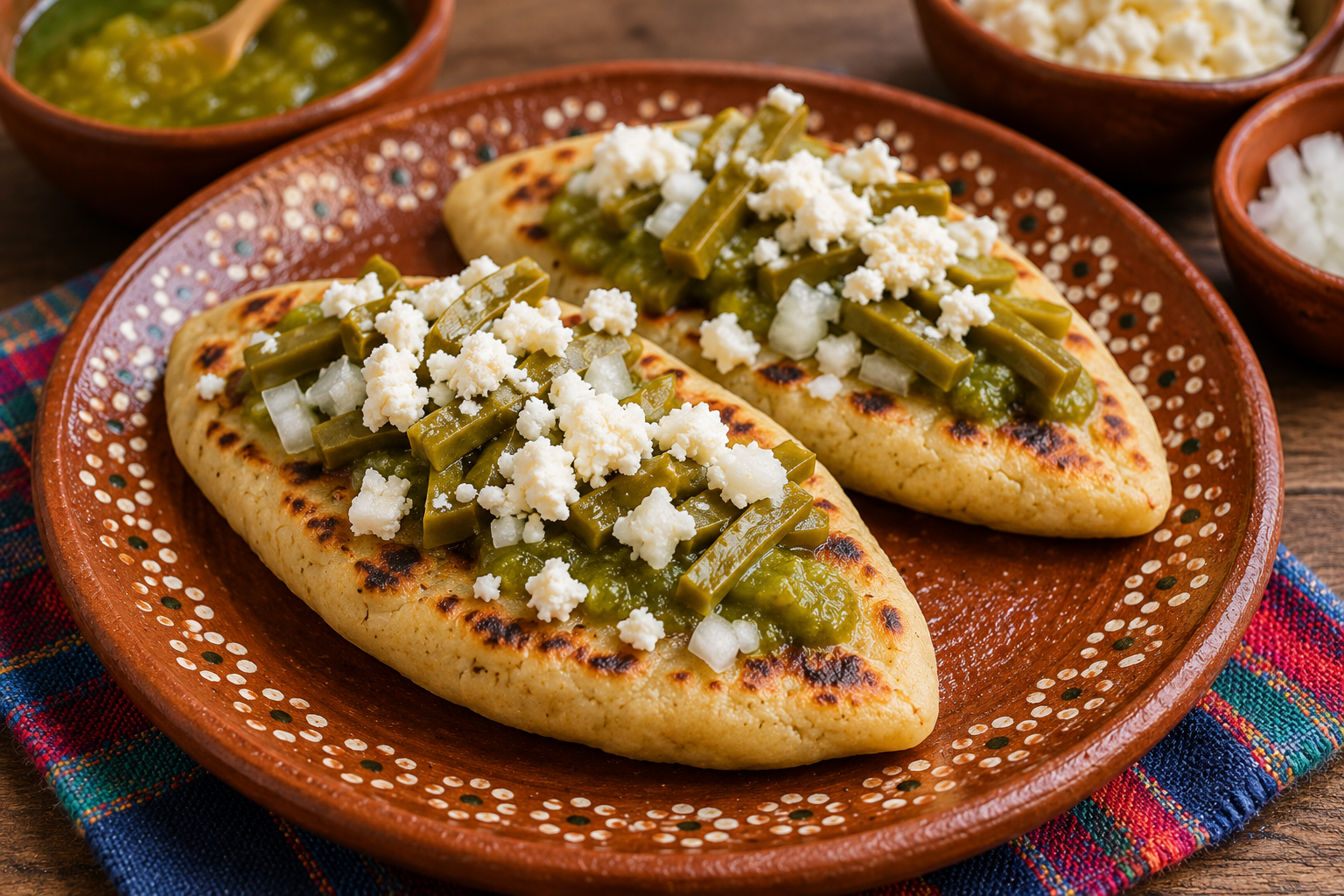
Tlacoyos are traditional Mexican corn masa cakes, typically shaped into elongated ovals and stuffed with beans, cheese or other savoury fillings. Cooked on a hot griddle until lightly toasted on the outside and tender inside, they are often served with salsa, crumbled cheese, chopped onion and nopales (cactus paddles).
This Mexican tlacoyos recipe uses masa harina and a black bean filling, making it relatively straightforward to prepare at home. The key is getting the dough consistency right, sealing the filling securely and cooking the tlacoyos gently enough that the masa cooks all the way through.

Ingredients for Mexican Tlacoyos
Tlacoyos are made using a handful of ingredients, although the type of corn flour and consistency of the bean filling are particularly important.
Masa harina
Masa harina is a flour made from dried, nixtamalised corn. During nixtamalisation, corn is treated with an alkaline solution before being ground, giving the resulting dough its characteristic flavour and workable texture.
Both white and yellow masa harina work well, while blue corn masa is particularly popular in traditional tlacoyos. Blue corn produces a darker, earthy-looking dough, but the shaping and cooking process is largely the same.
Use masa harina specifically intended for tortillas. Ordinary cornmeal, polenta or cornflour (cornstarch) are not direct substitutes.
Black beans
Black beans make a savoury, earthy filling that complements the corn dough. They should be cooked and mashed into a thick paste so they hold together when enclosed inside the tlacoyo.
You can use homemade refried beans or canned black beans that have been drained, mashed and cooked until thick. Avoid fillings containing too much liquid, as they can cause the dough to split during cooking.
Pinto beans and fava beans (broad beans) are traditional alternatives.
Cheese
Cotija and queso fresco are popular toppings for tlacoyos. Cotija is relatively salty and crumbly, whereas queso fresco is generally milder.
If neither is available, feta can provide a similar salty finishing touch, although it has a different flavour and texture from traditional Mexican cheeses.
Salsa
Green salsa (salsa verde) and red salsa (salsa roja) are both popular accompaniments. Salsa adds moisture, acidity and, depending on the chillies used, a little heat.
Tomatillo-based salsa verde works particularly well with black beans and corn masa, but either option is suitable.
Nopales
Nopales are the edible paddles of the prickly pear cactus. They have a mild, slightly tangy flavour and become tender when cooked.
They are traditionally prepared by removing their spines, cutting them into strips and boiling, grilling or sautéing them. Prepared nopales can also be purchased in jars or cans.
Nopales are a common topping rather than an essential component of the dough or filling. If you cannot find them, you can simply serve the tlacoyos with salsa, cheese and onion.
How to Make Mexican Tlacoyos
Making tlacoyos involves preparing the dough, enclosing the filling, shaping each piece into an oval and cooking it on a hot griddle.
1. Prepare the masa dough
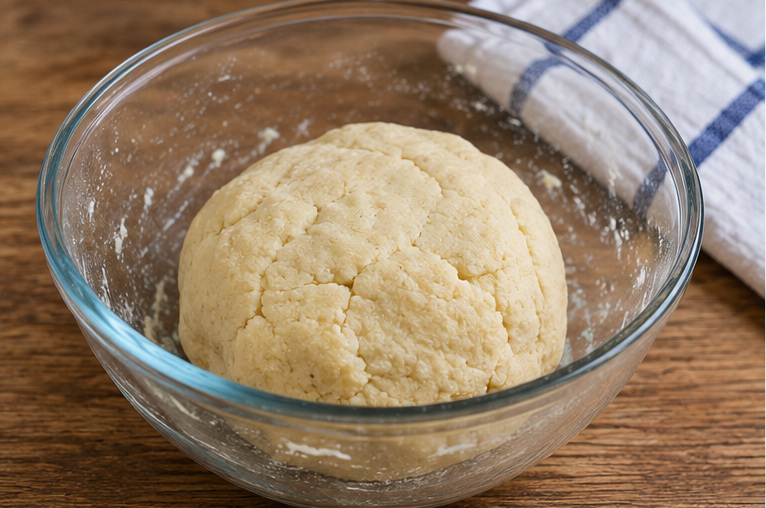
Combine the masa harina and salt in a mixing bowl. Gradually add warm water, mixing with your hands until the ingredients come together.
Knead briefly until the dough feels smooth, soft and pliable. It should hold together without sticking heavily to your fingers.
If it cracks when pressed, work in a little more water. If it feels excessively sticky, add a small amount of masa harina.
Cover the dough with a damp kitchen towel and allow it to rest for around 5-10 minutes.
2. Prepare the bean filling
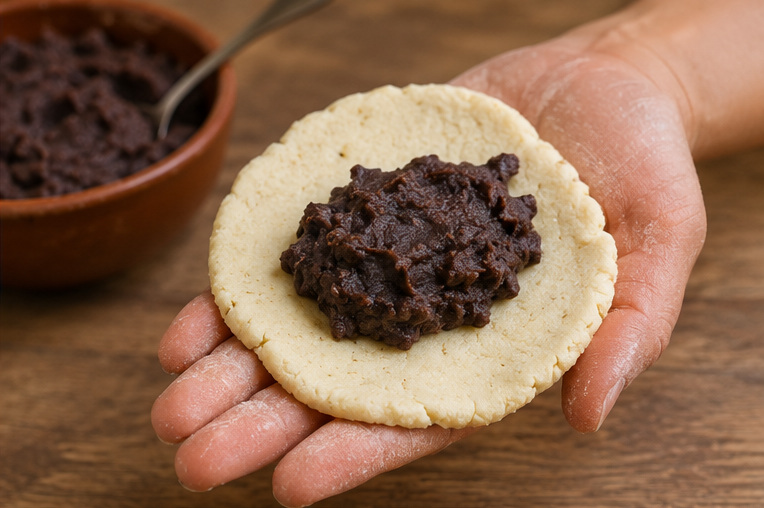
Mash cooked black beans until they form a thick, reasonably smooth paste.
If using canned beans, drain them well before mashing. If the mixture is still wet, cook it in a saucepan for a few minutes, stirring until any excess moisture evaporates.
The filling should be thick enough to stay in place when spooned onto the dough.
3. Fill and shape the tlacoyos
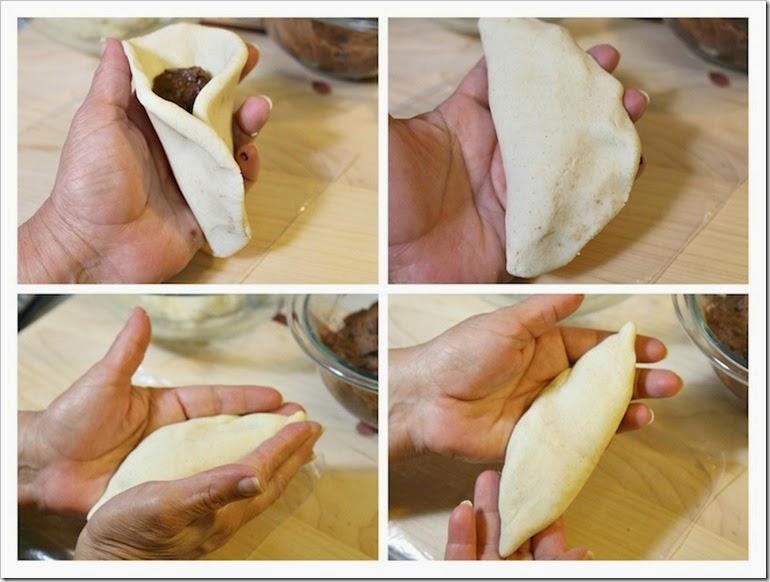
Divide the dough into eight equal portions and roll each into a ball.
Flatten one portion between two pieces of food-safe plastic or with lightly dampened hands, making a thick, roughly circular disc.
Place a tablespoon or so of bean filling in the centre. Bring the edges of the dough together over the filling and pinch them closed.
Gently flatten and lengthen the sealed dough into an oval, tapering the ends slightly to create the characteristic tlacoyo shape.
Take care not to press too firmly or the filling may break through.
4. Cook on a hot griddle
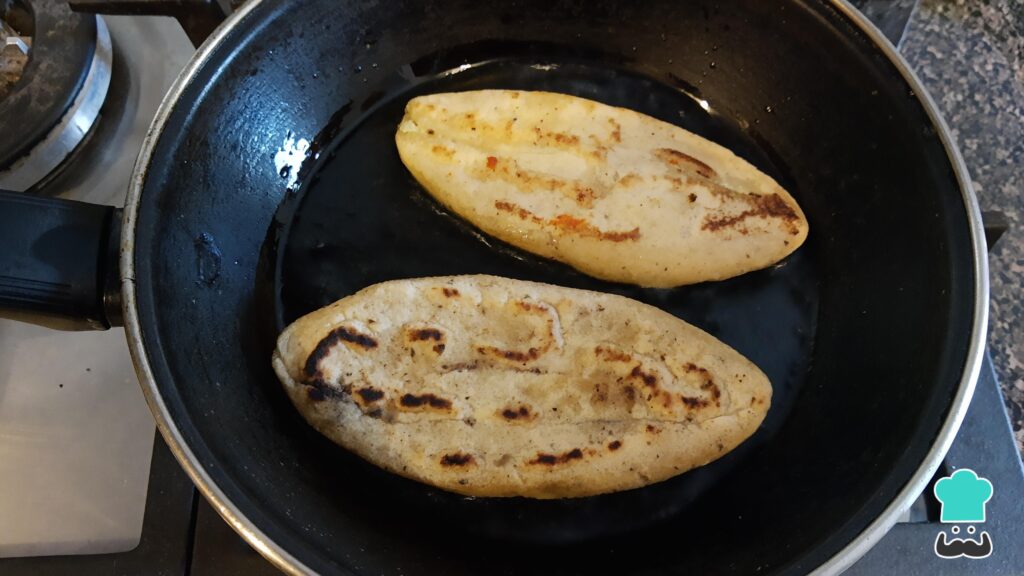
Heat a comal, cast-iron frying pan or heavy non-stick frying pan over medium heat.
Place the shaped tlacoyos on the hot surface and cook for approximately 3-5 minutes on each side, depending on their thickness.
They should develop a few toasted spots and feel firmer as the masa cooks. The centre should be fully cooked rather than wet or doughy.
For a slightly crispier finish, brush the pan with a little oil and cook the tlacoyos for an additional minute on each side.
5. Add the toppings and serve
Transfer the cooked tlacoyos to serving plates while still warm.
Spoon over your preferred salsa and add cooked nopales, crumbled cheese and finely chopped white onion.
Fresh coriander, Mexican crema and avocado can also be added according to preference.
Tips for Making the Best Tlacoyos
Keep the masa covered. Masa dough can dry out relatively quickly. Keep unused portions under a damp kitchen towel while shaping the remaining tlacoyos.
Check the dough for cracks. If the edges break apart as you flatten the dough, it is usually too dry. Add water in small amounts until it becomes more flexible.
Use a thick filling. Watery beans are harder to contain and can seep through the dough, particularly while shaping.
Avoid overfilling. Too much bean paste makes it difficult to seal the dough and increases the likelihood of the tlacoyo splitting.
Don’t flatten them too thinly. Tlacoyos should be thicker than ordinary corn tortillas, with enough dough to enclose the filling without tearing.
Control the heat. If the outside browns too quickly, reduce the heat. The masa needs sufficient time to cook through without burning.
Traditional Tlacoyo Fillings and Toppings
Although this recipe uses black beans, tlacoyos can be prepared with several different fillings.
Popular fillings
- Black or pinto beans: Mashed or refried beans provide a rich, earthy filling.
- Fava beans: Cooked and mashed broad beans are a traditional filling, particularly in central Mexico.
- Requesón: A soft, mild Mexican cheese that can be used as a filling, sometimes with herbs.
- Chicharrón prensado: A savoury preparation made from pressed pork cracklings, used in some regional variations.
Popular toppings
Tlacoyos can be served simply with salsa, or with several toppings to make them more substantial.
Common accompaniments include green or red salsa, cooked nopales, queso fresco, Cotija cheese, finely chopped white onion and fresh coriander.
Mexican crema, avocado and sautéed greens are other possibilities.
For a more filling meal, tlacoyos can also be served with eggs.
Origin and Cultural Significance of Tlacoyos
Tlacoyos have their roots in Mexico’s pre-Hispanic food traditions and remain closely associated with central Mexico, particularly Mexico City and surrounding regions.
The dish reflects the longstanding importance of corn and beans in Mexican cooking. Its dough is made from nixtamalised corn, a fundamental ingredient in many traditional Mexican foods, including tortillas, tamales and sopes.
The name comes from the Nahuatl word tlahtlaōyoh, which refers to a tortilla enclosing beans.
Traditionally, tlacoyos have been prepared on a comal, a flat cooking surface used throughout Mexican cuisine. They remain a familiar street food, sold at markets and food stalls, particularly during breakfast and lunchtime.
Regional variations include blue or white corn masa, different bean fillings and a range of toppings, depending on local ingredients and traditions.
Tlacoyos vs Gorditas, Sopes and Huaraches
Tlacoyos share several ingredients with other Mexican corn-based dishes, but there are important differences in their shape and preparation.
Tlacoyos are typically elongated or oval-shaped, with a filling enclosed inside the masa before cooking.
Gorditas are generally rounder and thicker. Many versions are cooked first and then split open to create a pocket for the filling, although preparation varies by region.
Sopes are small, thick corn masa bases with raised edges. Their toppings are generally added after cooking rather than enclosed in the dough.
Huaraches are usually larger and longer than tlacoyos, resembling the shape of a sandal. They are commonly topped with beans, salsa, cheese and other ingredients, although some versions also contain beans within the masa.

Mexican Tlacoyo Recipe
Mexican Tlacoyo is a dish consisting of a corn-based dough which is filled with beans and served with toppings.
Ingredients
For the dough
- Masa harina - 2 cups
- Warm water - approximately 1¼-1½ cups, as needed
- Salt - ½ tsp
For the filling
- Cooked black beans or thick refried black beans - 1 cup
- Salt - to taste, if needed
For cooking and serving
- Vegetable oil - 1 tbsp (optional)
- Salsa verde or salsa roja - ¾ cup
- Queso fresco or Cotija cheese (crumbled) - ½ cup
- White onion (finely chopped) - ¼ cup
- Cooked nopales (chopped or sliced) - 1 cup (optional)
- Fresh coriander - to garnish (optional)
Instructions
- Combine the masa harina and salt in a large bowl. Gradually mix in 1¼ cups of warm water, adding more as required to produce a soft, pliable dough.
- Knead briefly until smooth, cover with a damp kitchen towel and leave to rest for 5-10 minutes.
- Mash the cooked black beans into a thick paste. If the mixture contains excess moisture, cook it in a saucepan until sufficiently thick to hold its shape.
- Divide the masa dough into eight equal balls, keeping them covered until needed.
- Flatten each ball into a thick disc between pieces of food-safe plastic or using lightly dampened hands. Add approximately 1 tablespoon of bean filling to the centre.
- Fold the dough around the filling and pinch the edges securely closed. Gently shape into an elongated oval with slightly pointed ends, approximately 1-1.5 cm thick.
- Heat a comal or heavy frying pan over medium heat. Cook the tlacoyos in batches for approximately 3-5 minutes on each side, until lightly toasted and cooked through.
- For a crispier exterior, add a little vegetable oil to the pan and cook for another minute per side.
- Serve warm with salsa, cooked nopales, crumbled cheese, white onion and fresh coriander.
Notes
The amount of water needed depends on the masa harina used. Add it gradually and judge the dough by its consistency. Use thick rather than watery beans, and keep the remaining dough covered while shaping each tlacoyo.
How to Store and Reheat Tlacoyos
Tlacoyos are best eaten freshly cooked, when the outside is lightly toasted and the dough remains tender.
If preparing them ahead, store the cooked tlacoyos separately from their toppings. Allow them to cool before placing them in an airtight container in the refrigerator for up to three days.
To reheat, place them in a frying pan or on a griddle over medium-low heat, turning occasionally until heated all the way through. Add a small splash of water and cover briefly if the dough has become dry.
Cooked tlacoyos can also be frozen without toppings. Freeze them individually before transferring to a suitable container or freezer bag. Reheat thoroughly before serving.
FAQs
Can you make tlacoyos with regular corn flour?
You need masa harina made from nixtamalised corn rather than ordinary cornmeal or polenta. The nixtamalisation process helps produce a dough that can be shaped and sealed around the filling.
Can you use canned black beans for tlacoyos?
Yes. Drain the canned beans thoroughly and mash them into a paste. If necessary, cook them briefly to remove excess moisture before filling the dough.
Why is my tlacoyo dough cracking?
Cracking usually indicates that the masa is too dry. Add warm water a teaspoon or two at a time and knead until the dough is more pliable. Keeping the unused dough covered also helps prevent it from drying out.
Do you need a tortilla press to make tlacoyos?
No. Tlacoyos can be shaped entirely by hand. A tortilla press may help with the initial flattening, but the dough still needs to be folded, sealed and formed into its characteristic elongated shape.
Are tlacoyos gluten-free?
Traditional tlacoyos made from pure corn masa are naturally free from gluten-containing ingredients. However, check the masa harina packaging for cross-contamination information if preparing them for someone with coeliac disease, and check the fillings and toppings too.
Can tlacoyos be made vegan?
Yes. Use vegetable oil instead of lard and fill the dough with beans or another plant-based filling. Serve with salsa, nopales, onion and other plant-based toppings rather than dairy cheese or crema.