Jambon d’Ardenne: Traditional Belgian Cured Ham
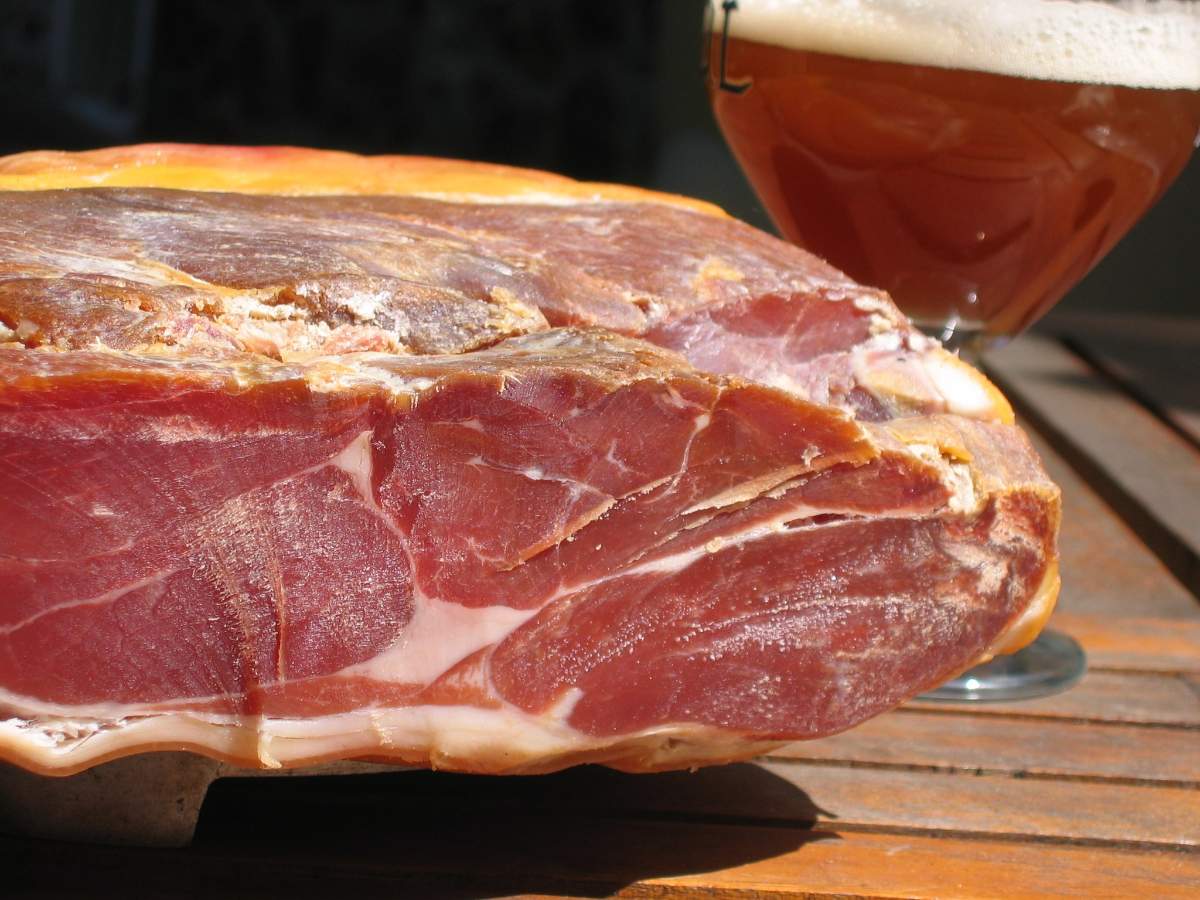
Jambon d’Ardenne is a traditional Belgian dry-cured ham produced in the Ardennes region of Wallonia. Made from pork leg, the ham is salted and matured over an extended period to develop its characteristic savoury flavour and firm texture.
Some varieties are also smoked, traditionally using wood or sawdust, which gives the ham an additional smoky aroma and flavour.
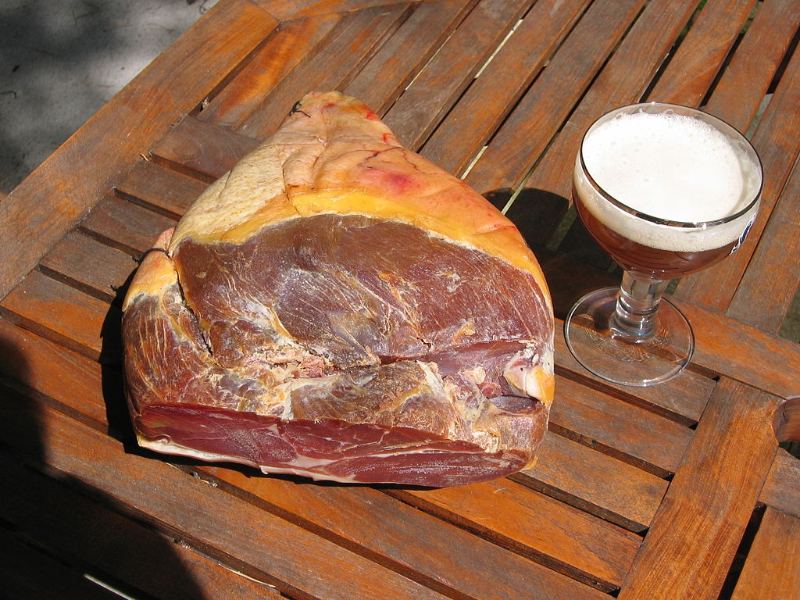
It is produced from the hind leg of a pig, which is salted before undergoing a period of cold maturation and ageing. Depending on the producer and type of ham, it may also be smoked as part of the process.
The result is a firm, flavourful ham which is usually sliced thinly before serving. The precise flavour varies depending on how it has been cured, matured and whether or not it has been smoked.
Jambon d’Ardenne is produced in Belgium’s Luxembourg Province and certain neighbouring areas of Liège and Namur.
It is a protected regional speciality and has held Protected Geographical Indication (PGI) status since 1996. Its production is closely associated with the climate and traditional curing methods of the Belgian Ardennes.
How is Jambon d’Ardenne Made?
Jambon d’Ardenne begins with a pig’s hind leg, which is cured using dry salt, rubbed with salt or immersed in brine. It then undergoes a period of cold maturation, during which the salt is distributed through the meat and the ham begins developing its characteristic flavour.
The ham may then be smoked, although this is not compulsory. When smoking is used, the protected production specification permits wood or sawdust but excludes coniferous and recycled wood.
Finally, the ham is aged and dried. The required production time varies according to the cut and type of Jambon d’Ardenne being produced.
The climate of the Ardennes has traditionally played an important part in this process. Changes in temperature and humidity, together with the circulation of fresh, humid air, provide conditions particularly suited to slowly maturing and drying ham.
History & Cultural Significance
Curing pork has a long history in the Ardennes, where salting and drying meat provided a means of preserving it before modern refrigeration.
By the beginning of the 19th century, records show that ham was being served to travellers throughout the Ardennes and regularly appeared on local menus. Pork leg was considered a particularly desirable cut and was also associated with festivities in the region.
Jambon d’Ardenne received legal recognition in Belgium in 1974, when a Royal Decree established requirements around its traditional production in the Ardennes.
In 1996, Jambon d’Ardenne was awarded Protected Geographical Indication (PGI) status at European level, protecting its name and connection with the region.
What does Jambon d’Ardenne taste like?
Jambon d’Ardenne has a rich, savoury and salty flavour with a firm but tender texture. Smoked varieties also have a distinctive woody, smoky character.
The long maturation process concentrates the flavour of the pork, making it well suited to being served in thin slices rather than thick pieces.
Types of Jambon d’Ardenne
Jambon d’Ardenne is produced in several different forms, including whole ham on the bone as well as smaller boneless cuts.
Coeur d’Ardenne refers to the centre cut of the ham, while Noix d’Ardenne is a smaller, lean cut taken from the ham. The size and type of cut affect how long the ham needs to mature and age.
How is Jambon d’Ardenne eaten?
Jambon d’Ardenne is usually served thinly sliced and can be eaten on its own or accompanied by bread and other simple ingredients.
It can be served as part of a cold platter or used in cooked Belgian dishes. Its salty, savoury flavour also pairs well with contrasting ingredients such as fruit.
One traditional Belgian preparation combines ham with chicory in a baked dish, with the European Commission itself featuring chicory wrapped in Jambon d’Ardenne as an example of its use in Belgian cooking.
What does PGI status mean?
Protected Geographical Indication, or PGI, is a designation used to protect foods whose qualities, reputation or characteristics are closely associated with a particular geographical area.
For Jambon d’Ardenne, the designation protects its connection with the Belgian Ardennes and its traditional production methods. The ham must undergo the required stages of production within the defined geographical area in order to be sold under the protected name.
Photo credit: HenriDavel