Indonesian Rujak Cingur Recipe
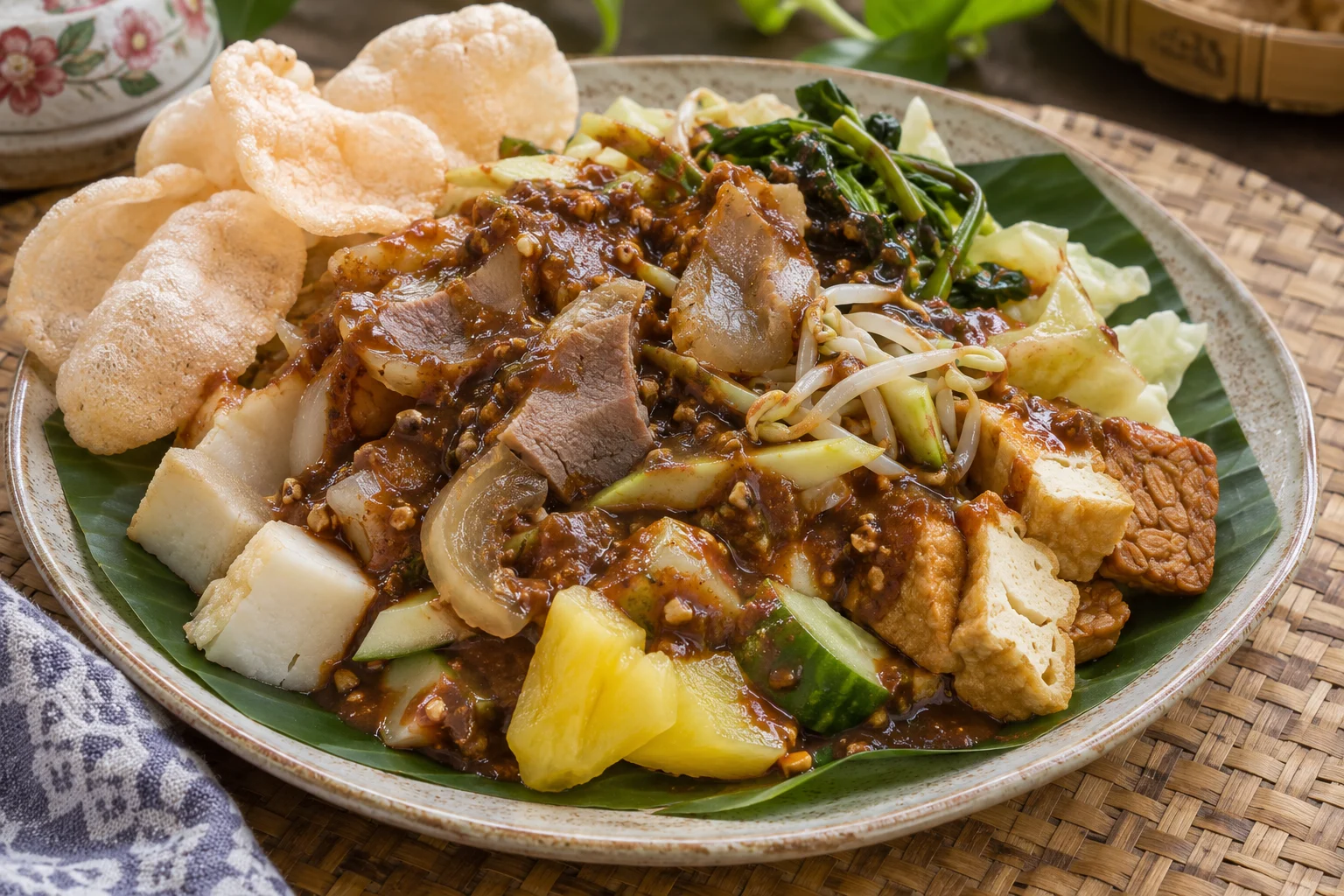
Rujak cingur is a Surabaya specialty combining cooked beef snout or lip with vegetables, fruit, tofu, tempeh and a dark peanut-and-petis dressing. The contrast of chewy cingur, crisp cucumber and tart fruit distinguishes it from an ordinary green salad. Explore more regional dishes in our Indonesian food guide.
This recipe starts with fully cooked, tender cingur and prepared rice cake, tofu and tempeh. Preparing those ingredients from raw adds time. The defining sauce ingredient is petis udang, a dark shrimp paste, rather than treating it as interchangeable with terasi.

Indonesian Rujak Cingur Recipe
Rujak cingur is a Surabaya specialty combining cooked beef snout or lip with vegetables, fruit, tofu, tempeh and a dark peanut-and-petis dressing. The contrast of chewy cingur, crisp cucumber and tart fruit distinguishes it from an ordinary green salad. Explore more regional dishes in our Indonesian food guide.
Ingredients
Salad
- 200 g fully cooked, tender beef snout or lip, sliced
- 100 g bean sprouts
- 100 g cabbage, shredded
- 100 g kangkung or spinach, trimmed
- 1 small cucumber, sliced
- 150 g firm green mango flesh, sliced
- 150 g pineapple flesh, cut into small pieces
- 150 g fully cooked fried tofu, cubed
- 150 g fully cooked fried tempeh, sliced
- 200 g prepared lontong rice cake, cut into pieces
Dressing
- 100 g roasted unsalted peanuts
- 1–3 bird's-eye chillies, to taste
- 1 tbsp cooked fried garlic
- 2–4 tbsp petis udang, according to strength
- 1 tsp tamarind paste mixed with 2 tbsp warm water
- 1–2 tsp grated palm sugar, to taste
- Warm water, added gradually to loosen
To serve
- Prawn crackers, optional
Instructions
- Confirm the cingur, tofu, tempeh and lontong are fully cooked and ready to use. Slice or cube them as listed, following any reheating or preparation instructions on their labels.
- Cook the bean sprouts, cabbage and kangkung or spinach separately in boiling water until thoroughly cooked but not falling apart. Drain very well and let the steam escape.
- Wash and prepare the cucumber, mango and pineapple. Keep them separate from any raw-meat preparation area.
- Grind the peanuts, chillies, cooked garlic and 1 teaspoon palm sugar in a mortar or food processor. Mix in 2 tablespoons petis and the tamarind water, then add warm water little by little to form a thick dressing. Follow the petis product's cooking directions if it requires heating.
- Taste and adjust petis, tamarind and sugar. Arrange the cooked vegetables, fruit, tofu, tempeh, cingur and rice cake on a platter or individual plates.
- Coat with the dressing immediately before serving and offer optional prawn crackers alongside. Refrigerate any components being held for later.
Notes
Serves 4. The 45-minute estimate excludes cooking raw cingur, making lontong and frying raw tofu or tempeh. Contains peanuts, crustaceans and soy. Existing nutrition estimates have not been recalculated.
Nutrition Information:
Yield: 2 Serving Size: 1Amount Per Serving: Calories: 1530Total Fat: 83gSaturated Fat: 27gTrans Fat: 0gUnsaturated Fat: 48gCholesterol: 88mgSodium: 1266mgCarbohydrates: 122gFiber: 16gSugar: 45gProtein: 97g
Nutrition is provided and calculated by Nutritionix. It is for general information purposes and is only a rough estimation.
What cingur and petis mean here
Cingur refers to the snout or mouth area of the animal; this recipe uses prepared beef snout or lip. Buy it from a reputable food supplier and confirm whether it is raw or already cooked. Raw cingur cannot be made tender by the recipe’s short assembly cooking.
Petis udang is a thick, dark shrimp-based paste. Terasi is a different fermented shrimp product. Check the petis label for cooking directions and salt, and start with less if yours is especially strong. This version does not add a large extra dose of terasi.
Prepare each component separately
Cook bean sprouts and greens thoroughly, then drain well. Keep cucumber and fruit raw, washed and cut into manageable pieces. Do not boil everything together: the contrast of textures is part of the dish.
Use firm fried tofu and tempeh that are already fully cooked. Lontong is compressed rice cake, not dry noodles; no egg noodles are needed for this version. Follow the rice cake’s storage and preparation label.
Balance the dressing
Grind roasted peanuts with chilli, garlic and sugar, then mix in petis, tamarind water and enough warm water to make a thick coating sauce. Add liquid gradually; a thin watery dressing slips off the ingredients.
The sauce should balance sweet, sour, salty and hot. Green mango and tamarind contribute acidity. Taste before adding sugar or petis, since fruit ripeness and paste strength vary.
Substitutions and serving
Spinach can stand in for kangkung, and cucumber plus firm green mango can carry the fresh component if other tropical fruit is unavailable. Leaving out cingur makes a different rujak variation; it should not be presented as an identical dish.
Serve immediately after dressing, with optional prawn crackers kept crisp on the side. The sauce contains peanuts and crustaceans; tofu and tempeh add soy, and packaged rice cake or crackers may contain additional allergens.
Make ahead and store
Prepare cooked components and dressing ahead, refrigerate separately and assemble near serving. Keep cooked cingur and rice cake according to the shortest applicable label or home-cooked storage guidance.
Refrigerate promptly and eat dressed leftovers within 24 hours for quality. If using cooked and cooled rice cake, cool it quickly, refrigerate and use within 24 hours. Do not keep dressed salad standing warm for a long gathering.
Frequently asked questions
What is cingur?
It is the snout or lip area, typically beef in this dish, cooked until tender before slicing. It is not simply any piece of raw beef.
Can I use raw beef snout in this method?
No. The stated timing assumes it is already fully cooked and tender. Raw snout needs a separate, much longer preparation following supplier guidance.
Is petis the same as terasi?
No. Petis udang is a dark shrimp paste or concentrate; terasi is a different fermented shrimp product. Their strengths and textures differ.
Does rujak cingur contain noodles?
Not in this version. It uses lontong rice cake, vegetables, fruit, tofu, tempeh and cooked cingur.
Can I leave out the snout?
Yes, if you prefer a fruit-and-vegetable rujak variation, but it changes the defining ingredient and should be described accordingly.
When should I add the sauce?
Just before serving. Drain cooked vegetables well and keep crackers separate so the salad does not become watery or lose its crunch.