Moules-Frites Recipe (Belgian Mussels and Fries)
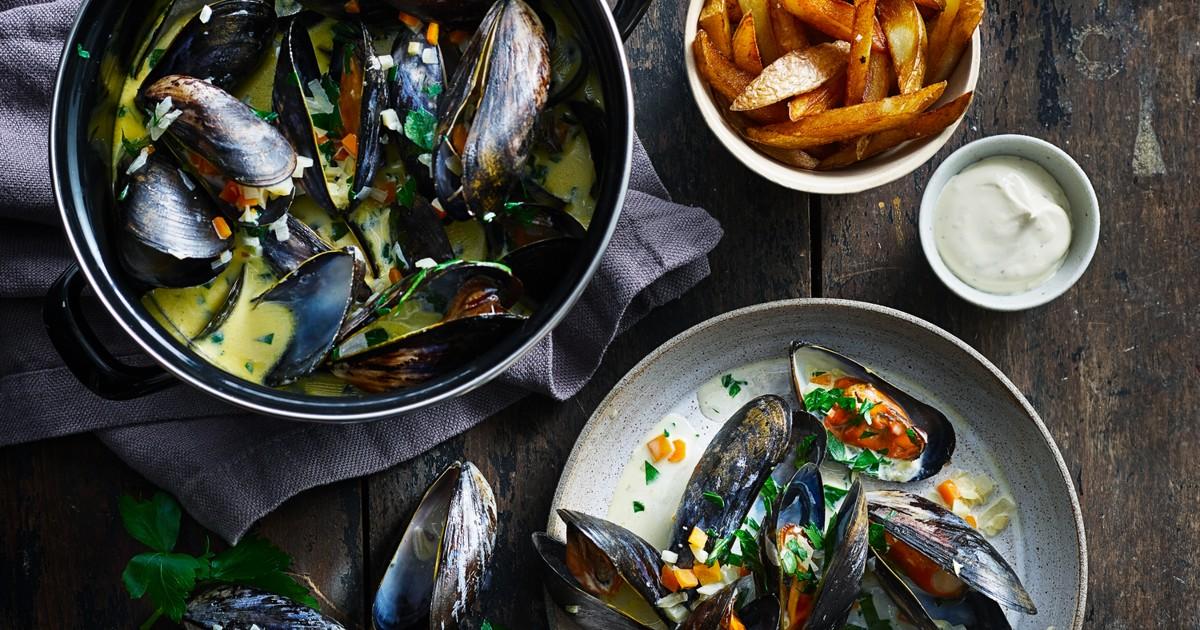
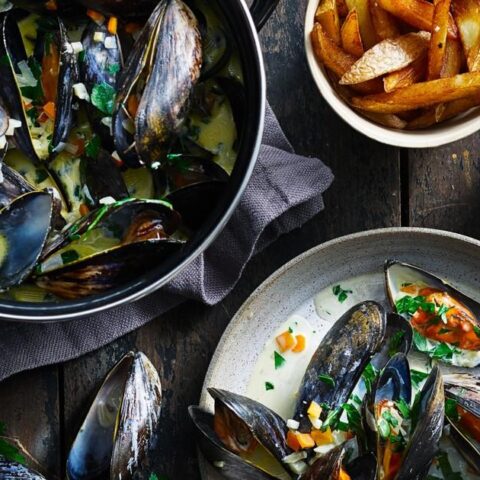
Moules-frites is a traditional Belgian dish consisting of mussels steamed in a fragrant broth, served with crispy French fries. The mussels are commonly cooked with white wine, shallots, garlic, butter and parsley, creating a light, savoury sauce that’s perfect for dipping the fries into.
Considered one of Belgium’s national dishes, moules-frites is a popular meal in Belgian restaurants and brasseries, as well as neighbouring northern France. This recipe uses a classic white wine preparation, accompanied by twice-cooked fries that are crisp on the outside and fluffy in the middle.

What Is Moules-Frites?
Moules-frites, meaning “mussels and fries” in French, combines two of Belgium’s most recognisable foods.
The mussels are usually steamed in a large, covered pot with aromatics and a small amount of liquid, such as white wine or beer. As they cook, the mussels release their natural juices, creating a richly flavoured broth.
The fries are traditionally cut relatively thick and cooked twice to achieve a soft interior and golden, crispy exterior. They are served separately from the mussels, often with mayonnaise for dipping.
Moules-frites is commonly served as a main course, with the mussels brought to the table in their cooking pot or divided between deep bowls.
Ingredients for Belgian Moules-Frites
The dish uses relatively few ingredients, so choosing good-quality mussels, suitable potatoes and a dry white wine makes a noticeable difference.
Fresh mussels
Fresh, live mussels are the main ingredient. Look for mussels with intact shells that smell fresh and pleasantly of the sea, rather than strongly fishy.
Most mussels sold by fishmongers are already cleaned to some extent, but you should still check them for damaged shells, remove any remaining beards and rinse away grit before cooking.
Allow approximately 500-700g of whole mussels per person for a generous main course, depending on appetite and the amount of fries being served.
Potatoes
Floury potatoes such as Maris Piper or King Edward are excellent choices for making fries because they produce a fluffy interior and crisp exterior.
In Belgium, Bintje potatoes are traditionally associated with fries, although they may be harder to find outside continental Europe.
Cut the potatoes into even sticks approximately 1cm thick so they cook at roughly the same rate.
Dry white wine
White wine adds acidity and depth to the cooking broth, balancing the natural sweetness and saltiness of the mussels.
Choose a crisp, dry wine such as Muscadet, Sauvignon Blanc or an unoaked Chardonnay. There’s no need to use an expensive bottle, but it should be a wine you would be happy to drink.
Avoid sweet white wines, which can make the broth taste unbalanced.
Shallots, garlic and butter
Shallots provide a gentle sweetness, while garlic adds a subtle savoury flavour. Butter helps soften the aromatics and enriches the cooking liquid.
Some Belgian preparations also include celery, which adds a fresh, slightly herbal flavour. It’s optional but works particularly well with mussels.
Fresh parsley
Flat-leaf parsley gives the finished dish freshness and colour. Add most of it towards the end of cooking so its flavour remains bright.
Frying oil and mayonnaise
Use a neutral oil suitable for deep-frying, such as vegetable, sunflower or rapeseed oil.
Traditional Belgian fries are often associated with beef fat, but vegetable oil is a practical alternative for home cooking.
Mayonnaise is a popular accompaniment, although it is not essential to the recipe.
How to Make Belgian Moules-Frites
The easiest way to prepare moules-frites is to cook the potatoes first, then prepare the mussels while the fries are resting between their two cooking stages.
The mussels only take a few minutes to steam, so they should be prepared towards the end to ensure everything is served hot.
1. Prepare the potatoes
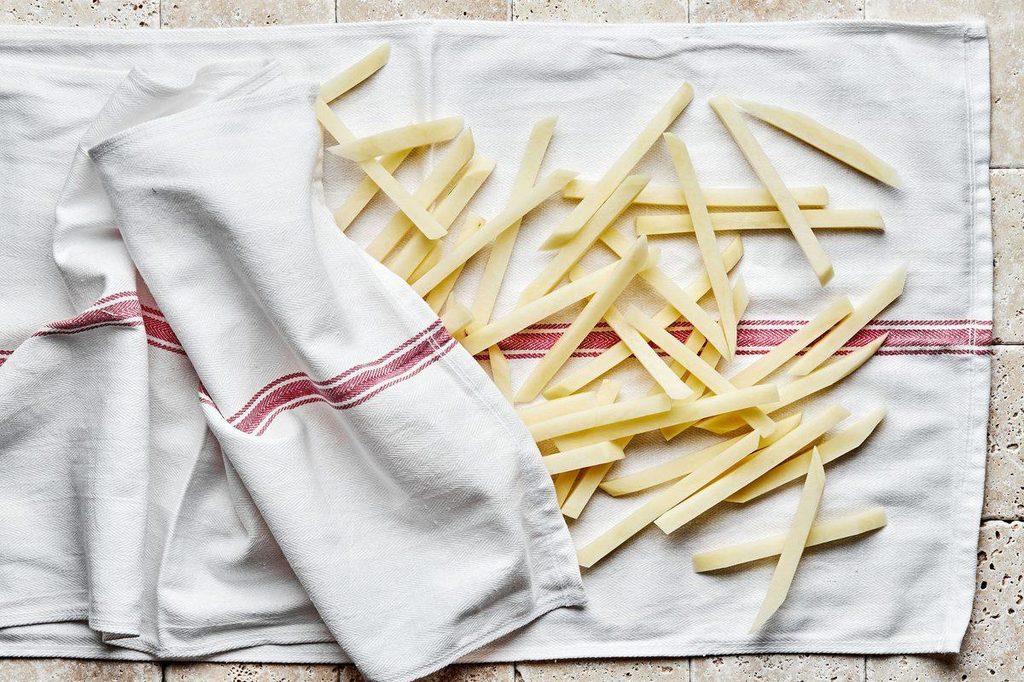
Peel the potatoes, or leave the skins on if preferred, and cut into evenly sized sticks approximately 1cm thick.
Rinse the cut potatoes under cold water to remove surface starch, then soak them in cold water for around 10 minutes.
Drain thoroughly and pat completely dry with a clean kitchen towel. Removing excess moisture helps prevent the oil from splattering.
2. Cook the fries for the first time
Heat the oil in a thermostatically controlled deep-fat fryer to approximately 150-160°C (300-320°F).
Add the potatoes in small batches, taking care not to overcrowd the fryer.
Cook for approximately 6-8 minutes, depending on thickness, until the potatoes are tender but still pale. They shouldn’t be deeply browned at this stage.
Remove the fries with a suitable basket or slotted spoon and leave them to drain on a wire rack. Allow them to cool for at least 10 minutes before frying again.
3. Prepare the mussels and aromatics
While the fries cool, clean and debeard the mussels as described above.
Finely chop the shallots and garlic, slice the celery if using, and roughly chop the parsley.
Have the wine measured out and a large, deep cooking pot with a tight-fitting lid ready.
4. Fry the potatoes until golden
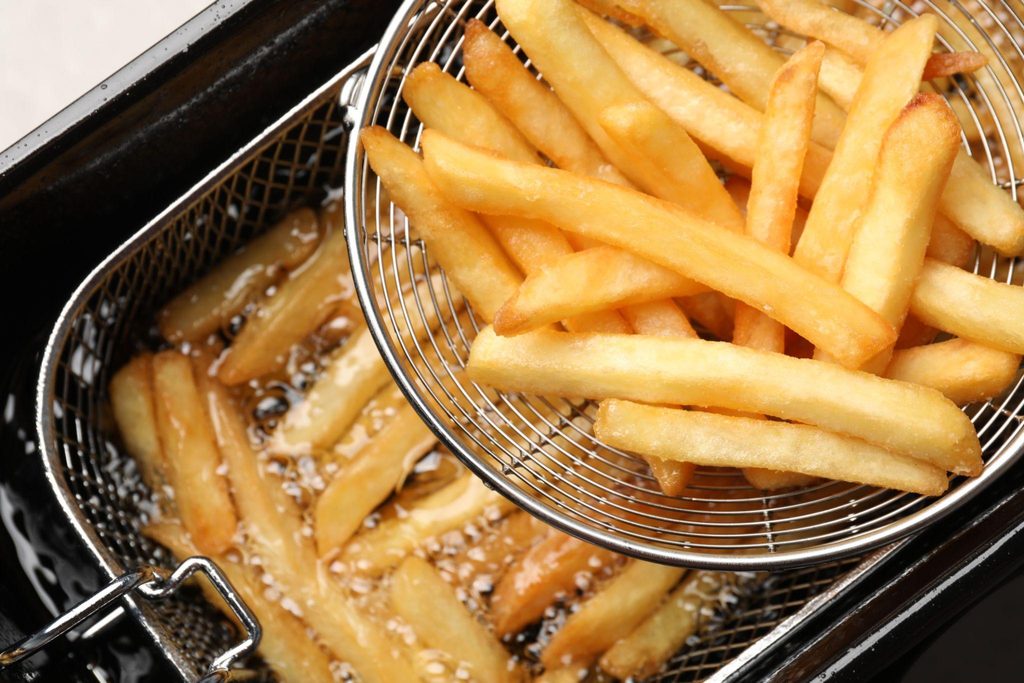
Increase the fryer temperature to approximately 180°C (355°F).
Return the potatoes to the oil in small batches and fry for another 2-4 minutes until golden and crisp.
Drain on a wire rack and season with salt while hot.
If necessary, keep the fries warm on an uncovered tray in a low oven while cooking the mussels, although they are best served as soon as possible after frying.
5. Cook the shallots and garlic
Melt the butter in a large, deep pot over medium heat.
Add the shallots and celery, if using, and cook gently for around 4-5 minutes until softened but not browned.
Add the garlic and cook for another 30 seconds, stirring to prevent it from burning.
6. Steam the mussels in white wine
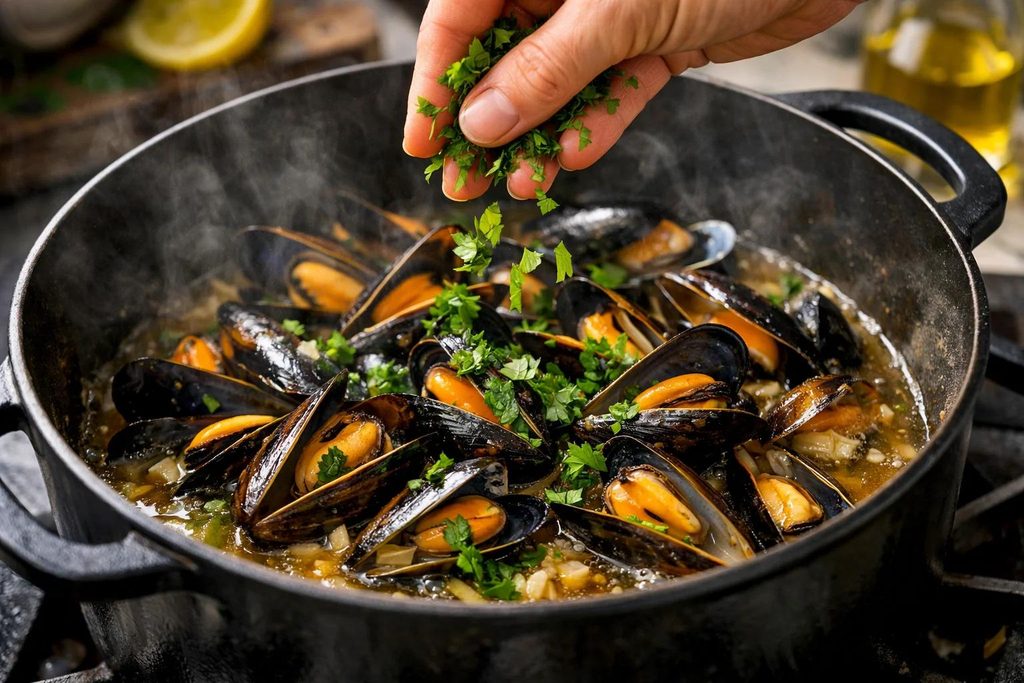
Pour the white wine into the pot and bring it to a simmer.
Add the cleaned mussels, increase the heat and cover tightly with a lid.
Steam for approximately 4-6 minutes, shaking the pot carefully once or twice during cooking to help the mussels cook evenly.
The mussels are ready when their shells have opened and the flesh is cooked through. Check towards the end of cooking to avoid overcooking them.
If your pot is too small to hold the mussels comfortably, cook them in batches.
7. Finish the broth
Remove the pot from the heat and discard any mussels that have remained closed after cooking.
Stir in most of the chopped parsley and season with freshly ground black pepper.
Taste the cooking liquid before adding any salt, as mussels naturally release salty juices.
8. Serve with the fries
Divide the mussels between deep serving bowls, or serve directly from the cooking pot.
Spoon over the warm white wine broth and scatter with the remaining parsley.
Serve immediately with the freshly cooked fries and mayonnaise on the side.
Origin and Cultural Significance of Moules-Frites
Moules-frites is strongly associated with Belgium, where it is widely regarded as a national dish.
Belgium’s coastal location and proximity to the North Sea have helped make mussels an important part of its food culture, although many of the mussels eaten in Belgium are supplied by neighbouring Dutch producers.
Fries also occupy a prominent place in Belgian cuisine. Traditional friteries and fritkots, which specialise in serving fries with different sauces and accompaniments, are a familiar feature of Belgian towns and cities.
The combination of steamed mussels and freshly fried potatoes became particularly popular in Belgian restaurants and brasseries, where it remains a staple.
Moules-frites is also widely eaten in northern France, reflecting the shared culinary traditions of the region.
Belgian Moules-Frites Recipe
Moules-Frites is a dish of mussels and fries from Belgium. The mussels are typically cooked in a flavorful broth where it steams until they open, indicating that they are cooked and ready to be served.
Ingredients
For the mussels
- Fresh live mussels - 2.5kg (approximately 5½ lb)
- Shallots (finely chopped) - 3 medium
- Garlic cloves (minced) - 4
- Unsalted butter - 50g
- Dry white wine - 250ml
- Flat-leaf parsley (chopped) - ½ bunch
- Celery stalks (finely sliced) - 2 (optional)
- Freshly ground black pepper - to taste
- Salt - only if needed
For the fries
- Floury potatoes (such as Maris Piper or King Edward) - 1kg
- Vegetable or sunflower oil - sufficient for a deep-fat fryer
- Salt - to taste
To serve
- Mayonnaise - approximately 150g (optional)
Instructions
- Peel the potatoes and cut into sticks approximately 1cm thick. Rinse under cold water and soak for 10 minutes to remove excess surface starch.
- Drain the potatoes and dry thoroughly with a clean kitchen towel.
- Heat the oil in a thermostatically controlled deep-fat fryer to 150-160°C (300-320°F). Fry the potatoes in small batches for approximately 6-8 minutes until tender but still pale.
- Transfer the potatoes to a wire rack and leave to cool for at least 10 minutes.
- Meanwhile, inspect the mussels and discard any with broken shells or those that remain open when gently tapped. Remove any beards and rinse briefly under cold running water. Keep chilled until ready to cook.
- Finely chop the shallots and garlic, slice the celery if using, and chop the parsley.
- Increase the oil temperature to 180°C (355°F). Fry the potatoes again in small batches for approximately 2-4 minutes until golden and crisp. Drain on a wire rack, season with salt and keep warm briefly if necessary.
- Melt the butter in a large, deep pot over medium heat. Add the shallots and celery, if using, and cook for 4-5 minutes until softened.
- Add the garlic and cook for another 30 seconds.
- Pour in the white wine and bring to a simmer. Add the cleaned mussels and cover tightly with a lid.
- Increase the heat and steam for approximately 4-6 minutes, shaking the pot carefully once or twice, until the mussels have opened and are fully cooked. Cook in batches if your pot is not large enough.
- Remove from the heat and discard any mussels that remain closed.
- Stir in most of the parsley and season with black pepper. Taste the broth before adding any salt.
- Divide the mussels between serving bowls, spoon over the cooking broth and garnish with the remaining parsley.
- Serve immediately with the hot fries and mayonnaise on the side.
Notes
Mussel preparation: Keep live mussels refrigerated in a breathable container until needed. Do not store or soak them in freshwater.
Frying: Use a thermostatically controlled deep-fat fryer where possible. If using a suitable deep pan, never fill it more than one-third full of oil, ensure the potatoes are completely dry and never leave the hot oil unattended.
Alternative preparation: Use a light fish or vegetable stock instead of white wine if preferred.
Cooking times: The exact frying and steaming times will depend on the size of the potatoes and mussels, the equipment used and the quantity being cooked.
Nutrition Information:
Yield: 4 Serving Size: 1Amount Per Serving: Calories: 1638Total Fat: 46gSaturated Fat: 13gTrans Fat: 0gUnsaturated Fat: 22gCholesterol: 412mgSodium: 2816mgCarbohydrates: 115gFiber: 7gSugar: 8gProtein: 170g
Nutrition is provided and calculated by Nutritionix. It is for general information purposes and is only a rough estimation.
Tips for Making the Best Moules-Frites
Use fresh mussels. Buy mussels from a reputable fishmonger, follow the storage instructions and cook them by their use-by date. If storing live mussels before cooking, keep them refrigerated in a breathable container covered with a damp cloth, not submerged in water or sealed airtight.
Don’t overcook the mussels. Mussels cook quickly and can become rubbery if left on the heat for too long. Check them after approximately four minutes and remove the pan from the heat once they are cooked.
Use a large enough pot. The mussels need room to move and open as they steam. Cook in batches if necessary rather than packing them tightly into a small saucepan.
Don’t add too much salt. The mussels release naturally salty cooking juices. Taste the broth before seasoning.
Dry the potatoes thoroughly. Surface moisture can cause hot oil to splatter and interfere with even frying.
Cook the fries twice. The first fry cooks the potatoes through at a lower temperature. The second creates their golden, crispy exterior.
Don’t overcrowd the fryer. Frying too many potatoes at once lowers the oil temperature and can leave them greasy rather than crisp.
Popular Moules-Frites Variations
Although white wine, shallots and parsley make a classic combination, moules-frites can be prepared with several different sauces.
Moules Marinière
Moules marinière is a classic preparation using white wine, shallots, butter and parsley, often with garlic.
It is one of the most familiar ways of preparing mussels for moules-frites, producing a light broth that complements the seafood without overpowering it.
Moules à la Crème
This variation adds cream to produce a richer, smoother sauce.
After steaming the mussels, remove them temporarily from the pot and stir approximately 100-150ml of double cream into the cooking liquid. Warm the sauce gently before returning the mussels to the pot or pouring it over them.
Moules à la Bière
In this Belgian variation, beer replaces the white wine.
A Belgian blonde ale or wheat beer works particularly well, giving the broth a malty, aromatic flavour. Very bitter beers can overpower the delicate taste of the mussels.
Moules à l’Ail
Garlic mussels place greater emphasis on the garlic flavour, often combining additional garlic with butter, parsley and sometimes cream.
Moules au Curry
Curried mussels are another popular variation, particularly in Belgian and northern French restaurants.
The sauce typically uses curry spices with cream, creating a warm, aromatic accompaniment to the mussels.
What to Serve with Moules-Frites
Moules-frites is generally served as a complete meal, but a few simple accompaniments can complement it.
Mayonnaise is the classic accompaniment for the fries. Garlic mayonnaise or aioli also works well.
Crusty bread is useful for soaking up any remaining mussel broth, although it is optional when serving a generous portion of fries.
A simple green salad with a light vinaigrette can add freshness and balance the richness of the dish.
Dry white wine or Belgian beer are traditional drinks to serve alongside moules-frites.
In Belgium, diners often eat mussels using an empty shell as a makeshift pair of tongs, picking the meat from the remaining shells.
How to Store and Reheat Moules-Frites
Moules-frites is best eaten immediately after cooking, as both the mussels and fries lose some of their texture when stored.
If you have leftover cooked mussels, remove the meat from the shells and refrigerate it promptly in an airtight container with a little cooking broth. Cool and refrigerate leftovers within two hours and eat them within 48 hours.
Reheat the mussels only once, gently and thoroughly, until steaming hot throughout. Avoid prolonged cooking, which can make them tough.
Leftover fries can be refrigerated separately and reheated in an oven or air fryer to help restore some crispness. They will generally be less crisp than freshly cooked fries.
FAQs
How do you pronounce moules-frites?
Moules-frites is pronounced approximately “mool freet”. The French name literally means mussels and fries.
What is the difference between moules-frites and moules marinière?
Moules marinière refers to mussels cooked in a white wine-based broth, typically with shallots and parsley. Moules-frites refers to the complete dish of mussels served with fries. Moules marinière is one of the most common ways of preparing the mussels for moules-frites.
How long should you cook mussels?
Fresh mussels generally take around 4-6 minutes to steam in a covered pot, depending on their size and the quantity being cooked. They should be cooked through, with their shells opened. Discard any that remain closed after cooking.
Can you make moules-frites without wine?
Yes. Replace the white wine with a light vegetable or fish stock and add a small squeeze of lemon juice for acidity. This produces a different flavour from the traditional wine-based version but still makes a pleasant broth.
Can you use frozen mussels for moules-frites?
Yes, provided they are suitable for cooking in a sauce or broth. Follow the manufacturer’s preparation instructions, as frozen mussels may already be cooked or partially prepared.
Pre-cooked mussels will generally only need to be heated thoroughly rather than steamed for the same length of time as fresh, live mussels.
Can you make moules-frites with oven chips?
Yes. Oven chips or air fryer fries are a convenient alternative if you don’t want to deep-fry potatoes.
Although the texture will differ from traditional twice-fried Belgian fries, they can still make a good accompaniment to steamed mussels.
Is cream traditionally used in moules-frites?
Cream is common in some variations, particularly moules à la crème, but it isn’t essential. A classic moules marinière preparation usually relies on wine, shallots, butter and herbs for its flavour.
What do you do with mussels that don’t open?
Discard any mussels that remain closed after cooking. Check that the remaining mussels are fully cooked before serving.