Hungarian Húsleves Recipe
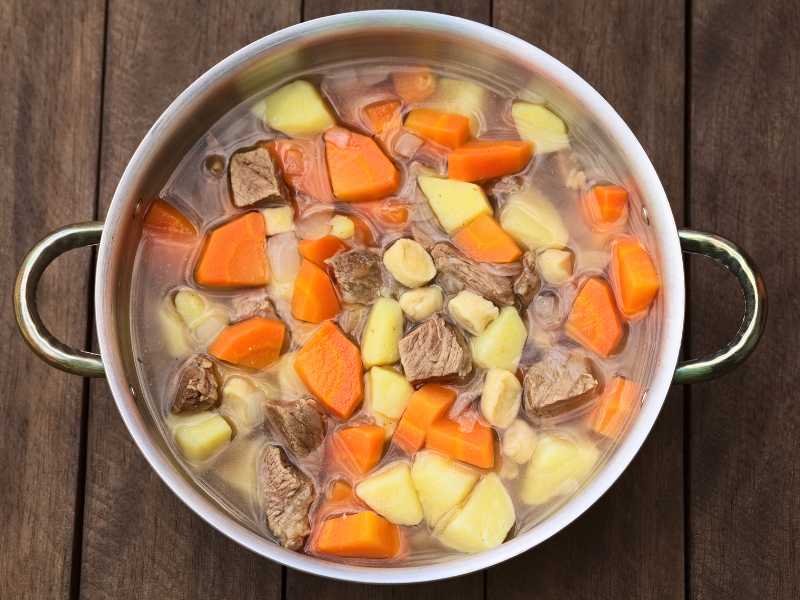
Húsleves is a traditional Hungarian smeat soup made with a clear, flavourful broth, tender meat, root vegetables and noodles.
The name simply means “meat soup” in Hungarian. Although recipes vary between families and regions, Húsleves is typically prepared by slowly simmering chicken, beef or other meat with vegetables such as carrots, parsley root, celery and kohlrabi.
Unlike thick or creamy soups, a good Húsleves is known for its clear, golden broth. It is traditionally cooked slowly, allowing the meat and vegetables to flavour the broth over several hours.
Once cooked, the broth is strained and commonly served with pieces of the cooked meat and vegetables alongside small soup noodles.
Húsleves is one of Hungary’s classic soups. At its simplest, it consists of meat and vegetables slowly simmered in water to create a rich broth.
Chicken and beef are particularly common, although pork and different cuts or combinations of meat may also be used.
Carrots, parsley root, celery root and kohlrabi are traditional vegetable choices, while onion and parsley add additional flavour. Whole black peppercorns are commonly used rather than large quantities of ground spices.
Small noodles are usually added when the soup is served.
The exact ingredients differ considerably from one household to another, making Húsleves the kind of traditional dish for which many Hungarian families have their own recipe.
Húsleves in Hungarian Cuisine
Húsleves is strongly associated with home cooking and family meals in Hungary.
A large pot can feed several people, making it particularly well suited to Sunday lunches, family gatherings and celebrations.
The slow cooking process is an important part of the dish. Rather than boiling everything rapidly, the meat and vegetables are gently simmered to produce a flavourful but relatively clear broth.
Húsleves can be served as the first course of a larger meal, although a generous bowl containing meat, vegetables and noodles can also make a satisfying meal in its own right.
What Vegetables are Used in Húsleves?
Root vegetables are an important part of traditional Húsleves.
Carrots add sweetness and colour, while parsley root, celery root and kohlrabi are commonly found in Hungarian versions of the soup.
Parsley root can be difficult to find outside Central and Eastern Europe. Parsnip makes a practical substitute if you cannot find it, although its flavour is somewhat sweeter.
The vegetables are usually kept in relatively large pieces rather than finely diced. This allows them to withstand the long cooking time without completely breaking apart.
What Noodles are Served with Húsleves?
Húsleves is traditionally served with small noodles.
One particularly traditional choice is csigatészta, a tiny Hungarian pasta whose name refers to its snail-like shape. These noodles are especially associated with Hungarian meat and chicken soups.
If you cannot find csigatészta, other small soup noodles or thin egg noodles can be used instead.
It is often better to cook the noodles separately and add them to individual bowls when serving. This prevents them from absorbing too much of the broth during storage.

Hungarian Húsleves Recipe
This traditional Hungarian Húsleves is a hearty meat soup made with chicken, root vegetables and small noodles. The chicken is slowly simmered with carrots, parsley root, kohlrabi, celery and onion to create a clear, flavourful broth.
The cooked chicken and vegetables are then served in the broth with csigatészta, traditional Hungarian soup noodles. If you can't find csigatészta, other small egg noodles can be used instead.
Ingredients
- Chicken, preferably bone-in - 1.5 kg
- Water - 3.5 litres
- Carrots - 3
- Parsley roots or parsnips - 3
- Small kohlrabi - 1
- Small celery root - 1
- Large onion - 1
- Fresh parsley - 1 bunch
- Whole black peppercorns - 1 tsp
- Salt - to taste
- Csigatészta or other small soup noodles - 150g
Instructions
- Place the chicken in a large stockpot and pour over the cold water.
- Slowly bring the water towards a simmer over medium heat.
- As foam begins to collect on the surface, remove it using a spoon or fine-mesh skimmer.
- Peel the carrots, parsley roots or parsnips, kohlrabi and celery root. Leave smaller vegetables whole or cut larger vegetables into large pieces.
- Peel the onion but leave it whole.
- Add the vegetables, onion, parsley and whole black peppercorns to the pot.
- Season with salt and reduce the heat to low.
- Allow the soup to cook at a very gentle simmer for approximately 2½–3 hours. Avoid rapidly boiling the soup, as gentle cooking helps keep the broth clear.
- Check the soup occasionally and skim away any additional foam or impurities that rise to the surface.
- Once the chicken is very tender and the broth is rich and flavourful, carefully remove the meat and vegetables.
- Strain the broth through a fine sieve into a clean saucepan.
- Taste the broth and add additional salt if required.
- Cook the csigatészta or other soup noodles separately according to the packet instructions, then drain.
- Remove the chicken meat from the bones and cut or tear it into serving-sized pieces.
- Divide the noodles, chicken and cooked vegetables between bowls.
- Ladle the hot, clear broth over the top.
- Garnish with fresh parsley and serve immediately.
Nutrition Information:
Yield: 4 Serving Size: 1Amount Per Serving: Calories: 687Total Fat: 38gSaturated Fat: 15gTrans Fat: 0gUnsaturated Fat: 19gCholesterol: 201mgSodium: 1034mgCarbohydrates: 40gFiber: 5gSugar: 6gProtein: 46g
Nutrition is provided and calculated by Nutritionix. It is for general information purposes and is only a rough estimation.
Tips for Making Húsleves
Start With Cold Water
Add cold water to the meat before gradually bringing the pot up to temperature. The long, slow cooking process allows flavour from the meat and bones to develop in the broth.
Keep the Soup at a Gentle Simmer
Avoid allowing Húsleves to boil vigorously.
A gentle simmer helps produce the clear broth traditionally associated with the soup. Rapid boiling agitates the ingredients and can make the broth cloudy.
Skim the Surface
When the meat first begins cooking, foam and impurities will rise to the surface.
Use a spoon or fine-mesh skimmer to remove them. Doing this during the early stages of cooking will help produce a cleaner, clearer broth.
Keep the Vegetables Large
Don’t finely chop the vegetables as you might for many other soups.
Húsleves cooks for several hours, so larger pieces are less likely to disintegrate during cooking.
Cook the Noodles Separately
Cooking the noodles separately gives you more control over their texture and helps keep the broth clear.
It is particularly useful if you expect to have leftovers, as noodles stored in the broth will continue absorbing liquid and become increasingly soft.
How to Store Húsleves
Allow leftover Húsleves to cool before transferring it to airtight containers and refrigerating.
If possible, store the broth separately from the noodles. This prevents the noodles from absorbing the broth and becoming overly soft.
The meat and vegetables can either be stored in the broth or kept separately and added when reheating.
Reheat the soup thoroughly until piping hot before serving.
Frequently Asked Questions
What does Húsleves mean?
Húsleves literally means “meat soup” in Hungarian. Hús means meat and leves means soup.
The name describes a broad style of Hungarian soup rather than one rigid recipe, which is why the ingredients can vary between households.
Is Húsleves the same as chicken soup?
Chicken Húsleves is a type of chicken soup, but Húsleves does not necessarily have to contain chicken.
Traditional versions can also be prepared using beef, pork or combinations of different meats and bones.
Why is my Húsleves cloudy?
A cloudy broth can be caused by boiling the soup too vigorously or failing to skim the foam from the surface during the early stages of cooking.
Keep the broth at a gentle simmer and skim it periodically for a clearer result.
A cloudy broth is still perfectly usable; clarity primarily affects the traditional appearance of the finished soup.
What can I use instead of parsley root?
Parsnip is a convenient substitute if parsley root isn’t available.
The two vegetables do not taste exactly the same – parsnip is generally sweeter – but it works well as an accessible alternative in Húsleves.
What can I use instead of csigatészta?
Any small soup noodle can be used if you cannot find Hungarian csigatészta.
Small egg noodles, vermicelli or another fine pasta suitable for soup will all work.
Is Húsleves served as a starter or main course?
Húsleves is often served as a soup course as part of a larger Hungarian meal.
However, when served generously with meat, vegetables and noodles, it can also be substantial enough to eat as a light main meal.